



Opioid Receptor
Opioid receptors are a group of G protein-coupled receptors with opioids as ligands. The endogenous opioids are dynorphins, enkephalins, endorphins, endomorphins and nociceptin. Opioid receptors are distributed widely in the brain, and are found in the spinal cord and digestive tract. Opioid receptors are molecules, or sites, within the body that are activated by opioid substances. Opioid receptors inhibit the transmission of impulse in excitatory pathways within the human body system. These pathways include the serotonin, catecholamine, and substance P pathways, which are all implicated in pain perception and feelings of well-being. Opioid receptors are further subclassified into mu, delta, and kappa receptors. All the classes, while exhibiting differing modes of action, share some basic similarities. They all are driven by the potassium pump mechanism, which is found on the plasma membrane of the majority of cells.
Opioid Receptor Isoform Specific Products
All Product Categories
-
Opioid Receptor Inhibitors
(23)
View all products
-
Opioid Receptor Agonists
(300)
View all products
-
Opioid Receptor Antagonists
(129)
View all products
-
Opioid Receptor Activators
(31)
View all products
-
Opioid Receptor Modulators
(28)
View all products
-
Opioid Receptor Controls
(7)
View all products
-
Opioid Receptor Ligands
(9)
View all products
-
Opioid Receptor Related Products (614)
Related Products (614)

-
Antibodies (3)
-
Opioid Receptor Isoform Comparison
-
[DAla2, DArg6] Dynorphin A, (1-13) (porcine)
![[DAla2, DArg6] Dynorphin A, (1-13) (porcine)](https://file.medchemexpress.com/product_pic/hy-p3632.gif "Click to View [DAla2, DArg6] Dynorphin A, (1-13) (porcine) Product Detail") 0 ImagesCat. No.: HY-P3632CAS No.: 75921-88-9Synonyms: DADAD[DAla2, DArg6] Dynorphin A, (1-13) (porcine) (DADAD) is an opioid peptide (dynorphinl-13, DYN) derivative found in porcine pituitary extracts. DYN is highly potent at the peripheral opioid receptors GPI and MVD, but is readily and rapidly degraded in vivo. [DAla2, DArg6] Dynorphin A, (1-13) (porcine) has some resistance to enzymatic cleavage and prevents peptide cleavage by enzymes.
0 ImagesCat. No.: HY-P3632CAS No.: 75921-88-9Synonyms: DADAD[DAla2, DArg6] Dynorphin A, (1-13) (porcine) (DADAD) is an opioid peptide (dynorphinl-13, DYN) derivative found in porcine pituitary extracts. DYN is highly potent at the peripheral opioid receptors GPI and MVD, but is readily and rapidly degraded in vivo. [DAla2, DArg6] Dynorphin A, (1-13) (porcine) has some resistance to enzymatic cleavage and prevents peptide cleavage by enzymes.
-
Naloxone (Standard)
 0 ImagesNaloxone Standard is the analytical standard of Naloxone (HY-17417A). This product is intended for research and analytical applications. Naloxone is an opioid receptor antagonist. Naloxone attenuates spinal cord stimulation‑associated anti‑hyperalgesic effects, antagonizes physiologic effects of endogenous opioid peptides linked to central nervous system injury sequelae, functions as a pressor agent to induce modest elevations in mean arterial blood pressure, exerts neuroprotective effects to improve post‑traumatic neurologic motor function, blocks opioid receptor‑mediated amnesic pathways, enhances memory consolidation, reverses Adrenocorticotropic hormone (ACTH) (HY-106373)‑ and epinephrine‑induced amnesia, and potentiates the memory‑facilitatory effects of ACTH and epinephrine.
-
HINT1-IN-1
 0 ImagesCat. No.: HY-173016HINT1-IN-1 (Compound 8) is the inhibitor for histidine triad nucleotide-binding protein 1 (HINT1) with a Ki of 1.14 μM. HINT1-IN-1 affects the cross-regulation between μ-opioid receptor (MOR) and NMDA receptor (NMDAR). HINT1-IN-1 enhances the analgesic effect of morphine without causing opioid tolerance and has independent analgesic effects in mouse model.
-
KOR agonist 1
 0 ImagesCat. No.: HY-161539KOR agonist 1 (Compound 7a) is a selective agonist for opioid receptor, with EC50s of 3.4, 701.2 and 1649 nM, for KOR, MOR and DOR, respectively. KOR agonist 1 binds KOR, MOR and DOR, with Kis of 3.9, 1053 and 4196 nM, respectively. KOR agonist 1 exhibits antinociceptive effect in ICR mouse model (ED50 in hot plate test is 0.3 mg/kg, in abdominal constriction test is 0.2 mg/kg).
-
Opioid receptor antagonist 2
 0 ImagesCat. No.: HY-174422CAS No.: 676494-79-4Opioid receptor antagonist 2 (Compound 9) is a potent opioid receptor antagonist. Opioid receptor antagonist 2 can reverse ventilatory depression and vocal cord closure induced by sedative agent analogs in mice. Opioid receptor antagonist 2 is promising for research of acute poisoning such as respiratory depression caused by overdose of opioids.
-
[Met5]-Enkephalin, amide
![[Met5]-Enkephalin, amide](https://file.medchemexpress.com/product_pic/hy-p1467.gif "Click to View [Met5]-Enkephalin, amide Product Detail") 0 ImagesCat. No.: HY-P1467CAS No.: 60117-17-1Synonyms: 5-Methionine-enkephalin amide[Met5]-Enkephalin, amide is an agonist for δ opioid receptors as well as putative ζ (zeta) opioid receptors.
0 ImagesCat. No.: HY-P1467CAS No.: 60117-17-1Synonyms: 5-Methionine-enkephalin amide[Met5]-Enkephalin, amide is an agonist for δ opioid receptors as well as putative ζ (zeta) opioid receptors.
-
SR-16434
 0 ImagesCat. No.: HY-122681CAS No.: 857262-16-9Synonyms: SR-16435 free baseSR-16434 is a nociceptin/orphanin FQ (NOP)/μ-opioid receptor partial agonist, with high binding affinity (NOP receptor Ki=7.49; μ-Opioid receptor Ki=2.70). SR-16434 can relieve pain.
-
Matrine-d3
 0 ImagesCat. No.: HY-W654256Purity: 99.14%Synonyms: Matridin-15-one-d3; Vegard-d3; α-Matrine-d3Matrine-d3 (Matridin-d3) is a deuterium labeled Matrine (HY-N0164). Matrine (Matridin-15-one) is an alkaloid found in plants from the Sophora genus that can act as a kappa opioid receptor and u-receptor agonist. Matrine has a variety of pharmacological effects, including anti-cancer, anti-oxidative stress, anti-inflammation and anti-apoptosis effects. Matrine is potential in the research of disease like human non-small cell lung cancer, hepatoma, papillary thyroid cancer and acute kidney injury (AKI).
-
AZD-2327
 0 ImagesCat. No.: HY-108043CAS No.: 875647-81-7AZD-2327 is a potent and selective δ-opioid receptor agonist. AZD-2327 binds to the human opioid receptor (Ki of 0.49 and 0.75 nM and EC50 of 24 and 9.2 nM at the C27 and F27 isoforms, respectively). AZD-2327 shows selectivity of >1000-fold over the human μ- and κ-opioid receptor subtypes as well as >130 other receptors and channels. AZD-2327 exhibits antidepressant and anxiolytic activities and can be used for the research of neurological disease.
-
MOR antagonist 2 hydrochloride
 0 ImagesCat. No.: HY-181605CAS No.: 3075862-29-9MOR antagonist 2 hydrochloride is a blood-brain barrier-permeable μ-opioid receptor (MOR) antagonist, with an IC50 of 28.37 nM, an EC50 of 4.25 nM, and a Ki of 0.18 nM against MOR. MOR antagonist 2 hydrochloride stabilizes the inactive conformation of MOR to reduce receptor activation levels. MOR antagonist 2 hydrochloride antagonizes analgesic effects in the mouse warm-water tail-flick test. MOR antagonist 2 hydrochloride induces fewer opioid withdrawal symptoms (wet dog shakes, paw tremors) in mice with opioid withdrawal symptoms. MOR antagonist 2 hydrochloride can be used for the research of opioid use disorder.
-
Met-Enkephalin-Arg-Phe
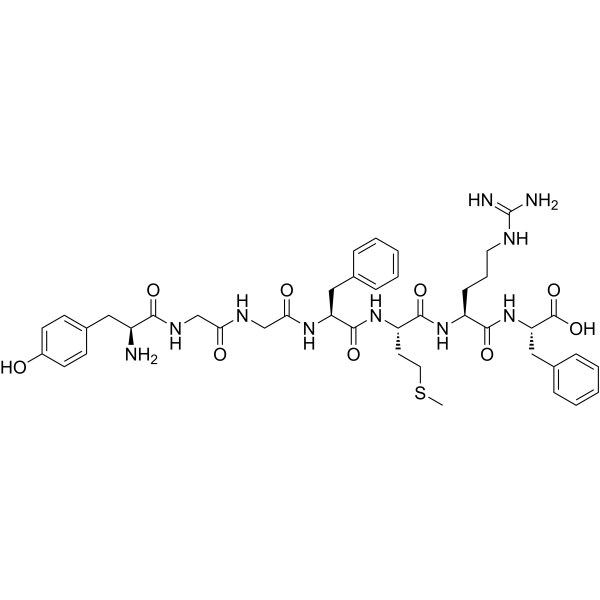 0 ImagesCat. No.: HY-P4196CAS No.: 73024-95-0Met-Enkephalin-Arg-Phe is a naturally occurring heptapeptide with analgesic activity.
-
TRPV1 antagonist 11
 0 ImagesCat. No.: HY-176063CAS No.: 3084843-71-7TRPV1 antagonist 11 (compound 2ac) is a potent TRPV1 antagonist with an IC50 of 29.3 nM. TRPV1 antagonist 11 is a potent μ-opioid receptor (MOR) agonist with a Ki of 60.3 nM. TRPV1 antagonist 11, a pyrimidine piperazine, exhibits pain relieving effects by antagonizing TRPV1 and stimulating MOR. TRPV1 antagonist 11 shows a potent, dose-dependent anti-nociceptive effect in a Formalin-induced pain model in mice.
-
[Arg14,Lys15]Nociceptin TFA
![[Arg14,Lys15]Nociceptin TFA](https://file.medchemexpress.com/product_pic/hy-p1301a.gif "Click to View [Arg14,Lys15]Nociceptin TFA Product Detail") 0 ImagesCat. No.: HY-P1301A[Arg14,Lys15]Nociceptin TFA is a highly potent and selective NOP receptor (ORL1; OP4) agonist, with an EC50 of 1 nM. [Arg14,Lys15]Nociceptin TFA displays high selectivity over opioid receptors, with IC50s of 0.32, 280, >10000 and 1500 nM for NOP, μ, δ and κ receptors, respectively.
0 ImagesCat. No.: HY-P1301A[Arg14,Lys15]Nociceptin TFA is a highly potent and selective NOP receptor (ORL1; OP4) agonist, with an EC50 of 1 nM. [Arg14,Lys15]Nociceptin TFA displays high selectivity over opioid receptors, with IC50s of 0.32, 280, >10000 and 1500 nM for NOP, μ, δ and κ receptors, respectively.
-
(D-Arg2, Sar 4)-Dermorphin (1-4)
 0 ImagesCat. No.: HY-P10555CAS No.: 90549-86-3(D-Arg2, Sar 4)-Dermorphin (1-4) is a tetrapeptide derivative of the peptide Dermorphin (HY-P0244) found in amphibian skin. (D-Arg2, Sar 4)-Dermorphin (1-4) has significant analgesic effects by binding to the μ-opioid receptor (MOR) in the body. (D-Arg2, Sar 4)-Dermorphin (1-4) can be used in the development of analgesic drugs.
-
D3R/MOR antagonist 1
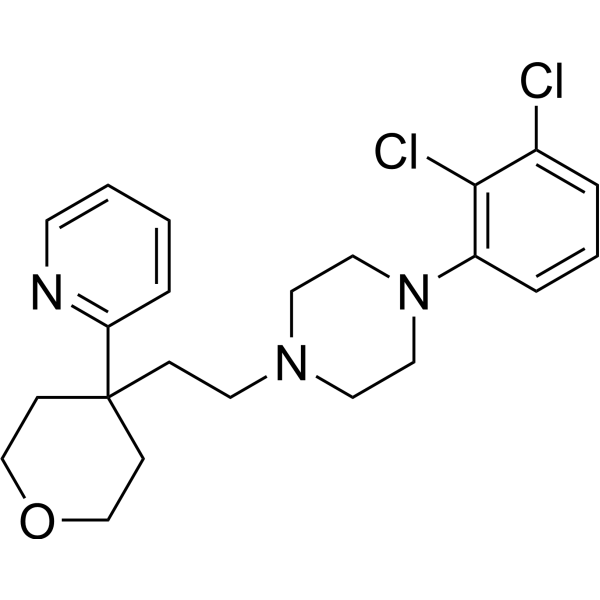 0 ImagesCat. No.: HY-149386CAS No.: 3033883-15-4D3R/MOR antagonist 1 (Compound 114) is a D3R/MOR antagonist (Ki: 46.5 nM and 691 nM respectively). D3R/MOR antagonist 1 has the potential to produce analgesic effects through MOR partial agonism, reduce opioid-misuse liability via D3R antagonism.
-
CJ-15161
 0 ImagesCat. No.: HY-13597CAS No.: 204970-97-8CJ-15161 is a κ-opioid receptor agonist. CJ-15161 can be used to study physiological functions such as pain relief and emotional regulation.
-
[Des-Tyr1]-gamma-Endorphin
![[Des-Tyr1]-gamma-Endorphin](https://file.medchemexpress.com/product_pic/hy-p10498.gif "Click to View [Des-Tyr1]-gamma-Endorphin Product Detail") 0 ImagesCat. No.: HY-P10498CAS No.: 67810-56-4[Des-Tyr1]-gamma-Endorphin is a neuropeptide, which can be found in human cerebrospinal fluid. [Des-Tyr1]-gamma-Endorphin exhibits antidepressant efficacy, facilitates the extinction of active avoidance and attenuates the passive avoidance behavior in rats.
0 ImagesCat. No.: HY-P10498CAS No.: 67810-56-4[Des-Tyr1]-gamma-Endorphin is a neuropeptide, which can be found in human cerebrospinal fluid. [Des-Tyr1]-gamma-Endorphin exhibits antidepressant efficacy, facilitates the extinction of active avoidance and attenuates the passive avoidance behavior in rats.
-
Mu opioid receptor antagonist 7
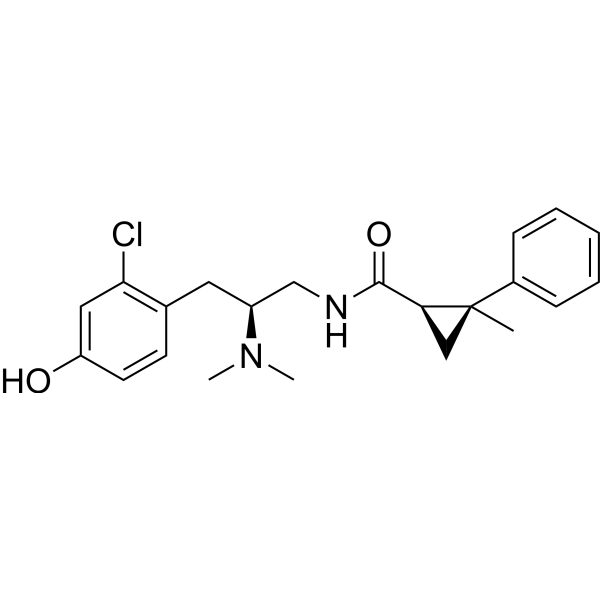 0 ImagesCat. No.: HY-155320CAS No.: 2378397-30-7Mu opioid receptor antagonist 7 (compound 24) is a potent and CNS permeable antagonist of µOR (µ-opioid receptor), with an IC50 of 29 ± 3.0 nM. Mu opioid receptor antagonist 7 can be used for the research of pain and opioid use disorder.
-
DPI-3290
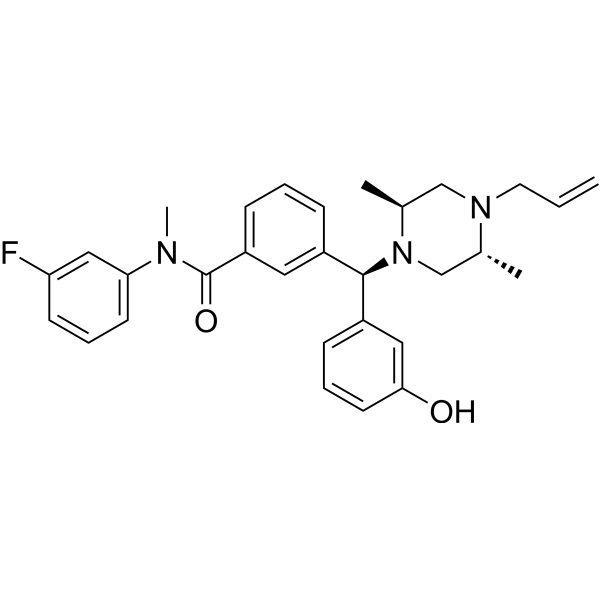 0 ImagesCat. No.: HY-19231CAS No.: 182417-73-8Synonyms: Org 41793DPI-3290 (Org 41793) is a potent and specific opioid receptors agonist with Ki values of 0.18 nM, 0.46 nM, and 0.62 nM for δ-, μ-, and κ-opioid receptors, respectively. DPI-3290 is one of a series of novel centrally acting agents with potent antinociceptive activity.
-
N-Benzylnaltrindole hydrochloride
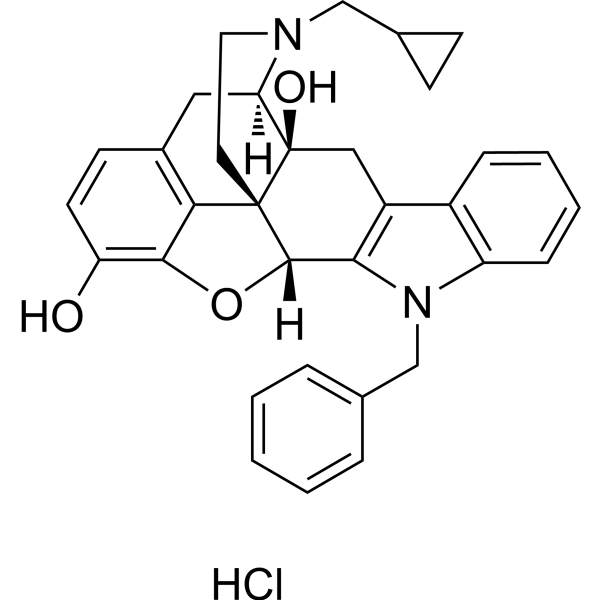 0 ImagesCat. No.: HY-101199CAS No.: 1206487-81-1N-Benzylnaltrindole hydrochloride is a potent δ2-selective opioid receptor antagonist. Benzylnaltrindole hydrochloride has a long duration of action in vivo than Naltriben (NTB). N-Benzylnaltrindole hydrochloride iserve as a useful tool in the pharmacologic characterization of δ-opioid receptor function.




